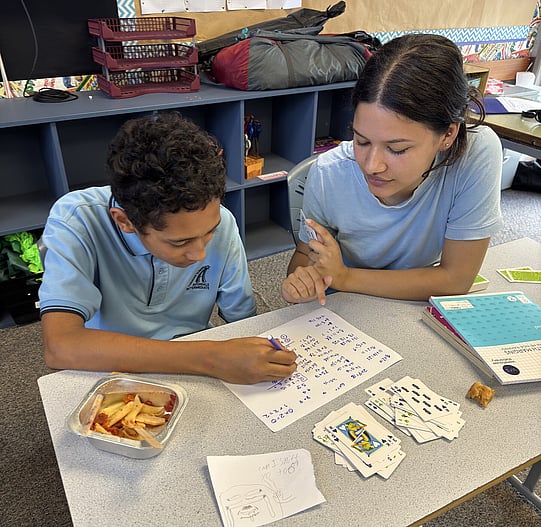
There are a number of mentoring programmes that operate in schools in Aotearoa but few have the ‘near’ peer features of the MATES programme. Recently I sat down with programme manager Teri Fong Murray, to explore some of this exciting mahi.
MATES (Mentoring and Tutorial Education Services) is one of the Great Potentials suite of programmes. The idea originated in Isreal and was introduced to New Zealand by Dame Lesley Max 23 years ago. The aim of MATES is to support students at transition times and although it started as a Year 13 programme to build secondary school students’ confidence as they transition into tertiary study, it now also works at Year 8 level as students move onto high school (MATES Senior and MATES Junior). The ‘near peer’ mentors/tutors are recruited from second year tertiary students and are paid on an hourly basis. The programme is set up in 14 Auckland schools working with over 200 students.
“Building a positive partnership with the school is key” says Teri. With strong buy-in from the school leadership, MATES responds to the school’s vision and identified student needs. The teacher in charge (TIC) is usually a dean, or a person of some influence. It is the commitment of the school and the TIC which drives the programme. Students can self-select but are often recommended by teachers. The TIC ensures the programme runs well in the school, helps with student recruitment and selection, provides student profiles and take a role in contacting whānau. The value the school and the TIC place on MATES is reflected in student attitudes, with high levels of programme attendance and commitment.
Positive Energy
Teri says that MATES operates as a youth-driven programme, working closely with students to determine how they like to learn and what they want to focus on. Do they work best indoors or outdoors; do they excel with a group or individual approach; do they want tutoring in specific academic subjects or is a more mentoring style required? For rangatahi/taiohi it is the relationship with the MATES mentor that is fundamental. A positive energy is generated as they spend time together: 2 hours a week, after school, for the year. The students really enjoy the connection with a slightly older peer who is there to help them.
Mentor Recruitment
When it comes to recruitment of mentors, the programme is looking for well-rounded second year or above tertiary students, who have a passion to work with young people: open-minded young adults, comfortable with new challenges and experiences who will see this as a two-way relationship where they learn as much as the younger students they will work with. For the MATES Senior programme, a background in NCEA is important. The programme recruits empathetic people who understand the challenges of undergraduate study, who know what it takes to be resilient. Teri says it is really exciting when a past mentee wants to be a mentor.
Benefits of the Programme
The MATES programme offers many benefits for participants and Teri highlighted a couple. School students get one-to-one time to speak with a dedicated older peer who genuinely wants to help them. This sort of attention is not possible in a busy classroom. The student is able to express a high degree of autonomy in deciding what to focus on and how to learn. Mentors and coordinators develop new skills; experience trusting relationships with non-familial younger peers and have an opportunity to grow as young leaders.
Transitions are an incredible time of opportunity. Well-supported, successful transitions not only have immediate benefits in terms of confidence and self-esteem for individuals involved but lead to long term growth and development. The kind, caring MATES mentors and coordinators can be proud that their positive energy opens the pathway for Year 8 and Year 13 students to thrive in their next learning adventure.